
What Are Blade Signs and How Do They Work
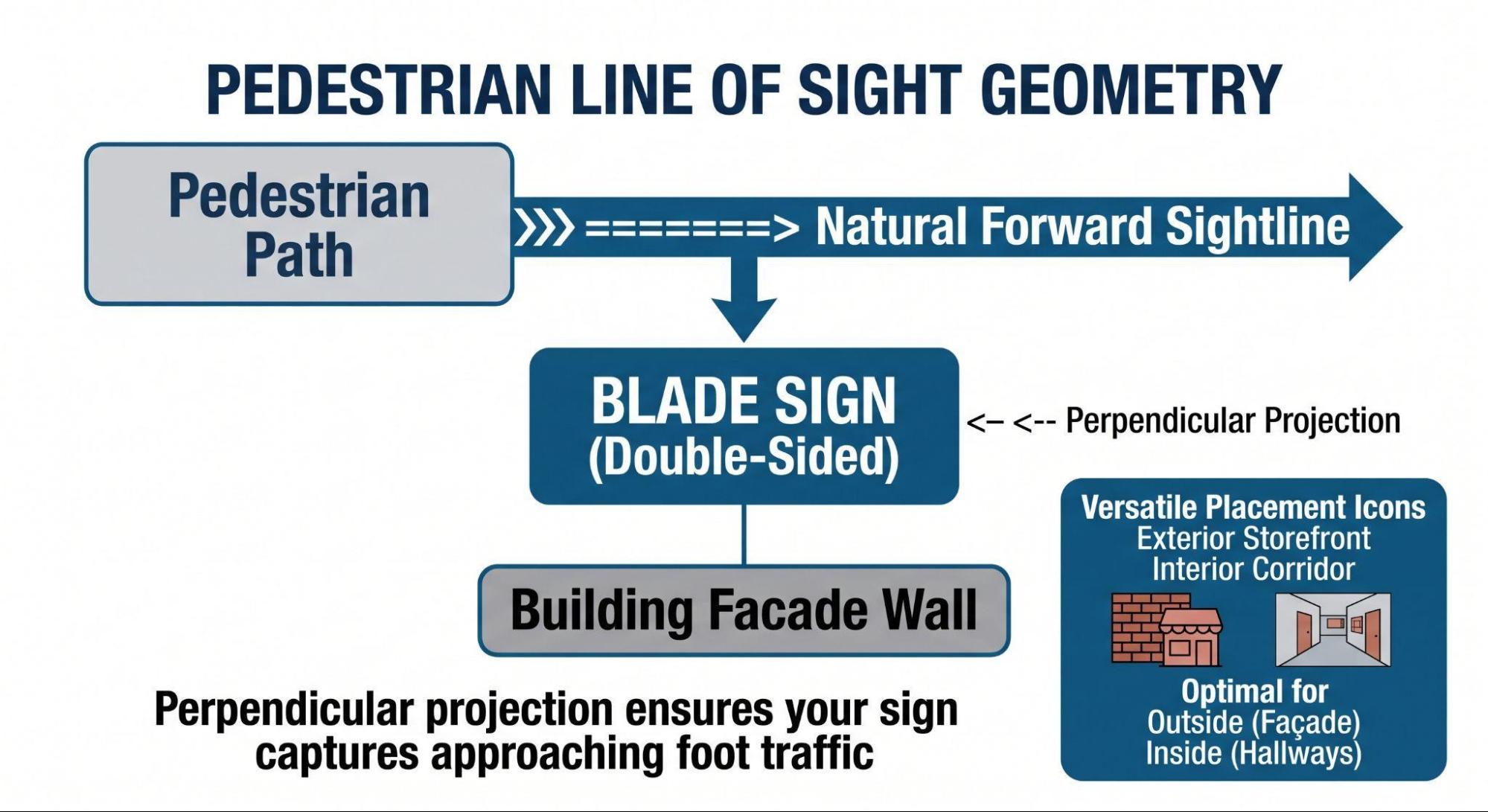
A blade sign is a sign that projects perpendicular to a wall or building surface, placing key information directly in the natural line of sight. These versatile displays work inside and outside commercial properties to improve business identification, guide foot traffic, and elevate property aesthetics. While flat wall signs mark a building face, blade signs capture the attention of people moving along sidewalks, hallways, and aisles.
Whether you manage an office tower, a school campus, a medical center, or a retail plaza, a coordinated projecting sign system makes your space feel polished and organized. When people navigate a building or street, they look straight ahead down their path of travel. They rarely turn their heads to read flat wall signs mounted above doorways. A blade sign projects outward from a wall or structural column at a ninety-degree angle, placing visual markers directly in front of approaching pedestrians.
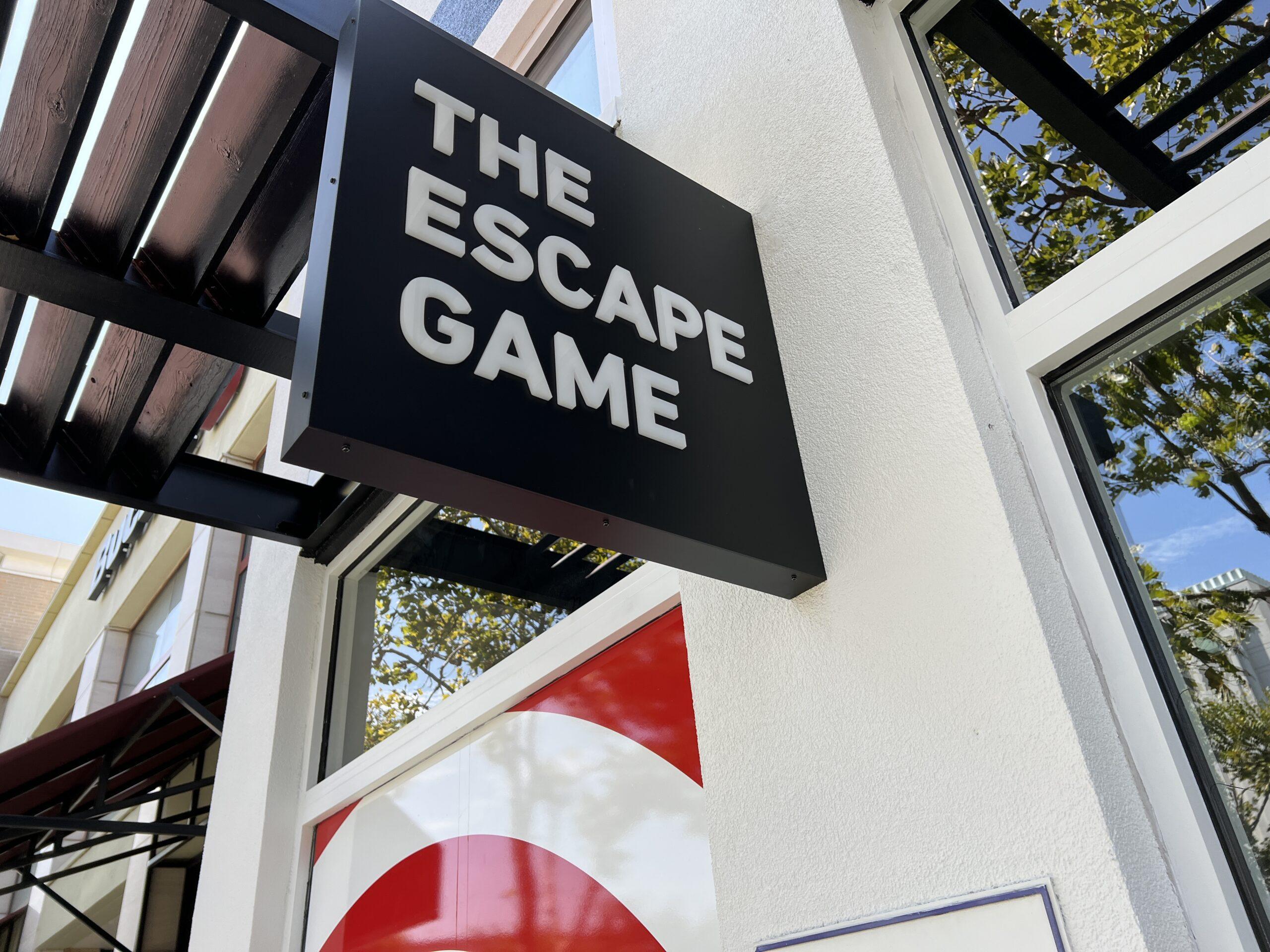
Custom double-sided blade sign installed for The Escape Game in Rancho Cucamonga, CA, mounted perpendicular to the storefront facade to capture pedestrian foot traffic.
These double-sided or single-sided signs adapt easily to both interior corridors and exterior facades. Depending on your building architecture, business blade signs can be non-illuminated dimensional panels, internally lit LED lightboxes, or elegant halo-lit metal displays. They can hang from decorative iron brackets or mount flush using clean steel posts. Integrating a classic storefront blade sign creates an inviting entry point, while reviewing our collection of photos of blade signs in Los Angeles shows how these versatile formats suit different architectural styles.
10 Overlooked Places Where Blade Signs Improve Visibility and Wayfinding
Many property leaders associate projecting signs only with small boutique retail shops. In practice, blade signs solve navigation challenges across complex commercial, institutional, and industrial environments. A coordinated system helps visitors find their destination while making the entire property feel intentionally designed.
1. Long Office Corridors
Multi-tenant office corridors can feel repetitive and confusing to clients. Mounting sleek projecting plaques above suite doors helps visitors spot room numbers and company names from down the hall, reducing missed appointments and hallway wandering.
2. Schools and University Campuses
Educational facilities feature wide hallways, multiple wings, and busy common areas. Double-sided interior blade signs help students, parents, and visitors find administrative offices, libraries, restrooms, and science labs quickly during peak passing periods.
3. Parks and Recreational Facilities
Outdoor parks, sports complexes, and community centers benefit from weather-tested exterior blade signs mounted on posts or pavilion walls. They clearly mark rental offices, restroom facilities, first aid stations, and trailheads for park visitors.
4. Medical Buildings and Healthcare Campuses
Visiting a hospital or clinical plaza can be stressful for patients. Clear wayfinding is essential. Hanging projecting signs outside departments, blood draw labs, radiology suites, and elevator lobbies calms patient anxiety by providing reassuring directional cues.
5. Manufacturing Plants
Large industrial facilities require strict safety controls and clear navigation for employees, truck drivers, and inspectors. Industrial blade signs mounted perpendicular to main walkways clearly identify safety zones, shipping offices, quality control bays, and hard-hat areas.
6. Warehouses and Distribution Centers
In high-ceiling distribution centers, floor markings get covered by forklift traffic and stacked pallets. High-mounted projecting signs identify specific aisle numbers, loading dock bays, and staging zones, keeping daily logistics moving efficiently.
7. Parking Structures and Pedestrian Exits
Multi-level parking garages can be confusing to navigate. Installing reflective or illuminated blade signs above pedestrian exit doors, stairwells, pay stations, and EV charging bays guides drivers safely from their vehicles to the main building entry.
8. Hotels and Conference Centers
Hospitality venues host guests who are unfamiliar with the building layout. Elegant interior blade signs guide attendees toward ballrooms, business centers, dining halls, and guest elevators, enhancing the overall guest experience.
9. Apartment and Mixed Use Properties
Residential complexes with street-level retail require clear separation between commercial entries and tenant living areas. Coordinated projecting signs identify leasing offices, fitness centers, mailrooms, and individual retail entrances without cluttering the facade.
10. Outdoor Malls and Shopping Centers
Pedestrians walking along covered walkways or open-air plazas cannot see flat storefront plaques until standing right in front of the glass. Mounting uniform double-sided business blade signs along a retail colonnade guides shoppers smoothly from store to store.
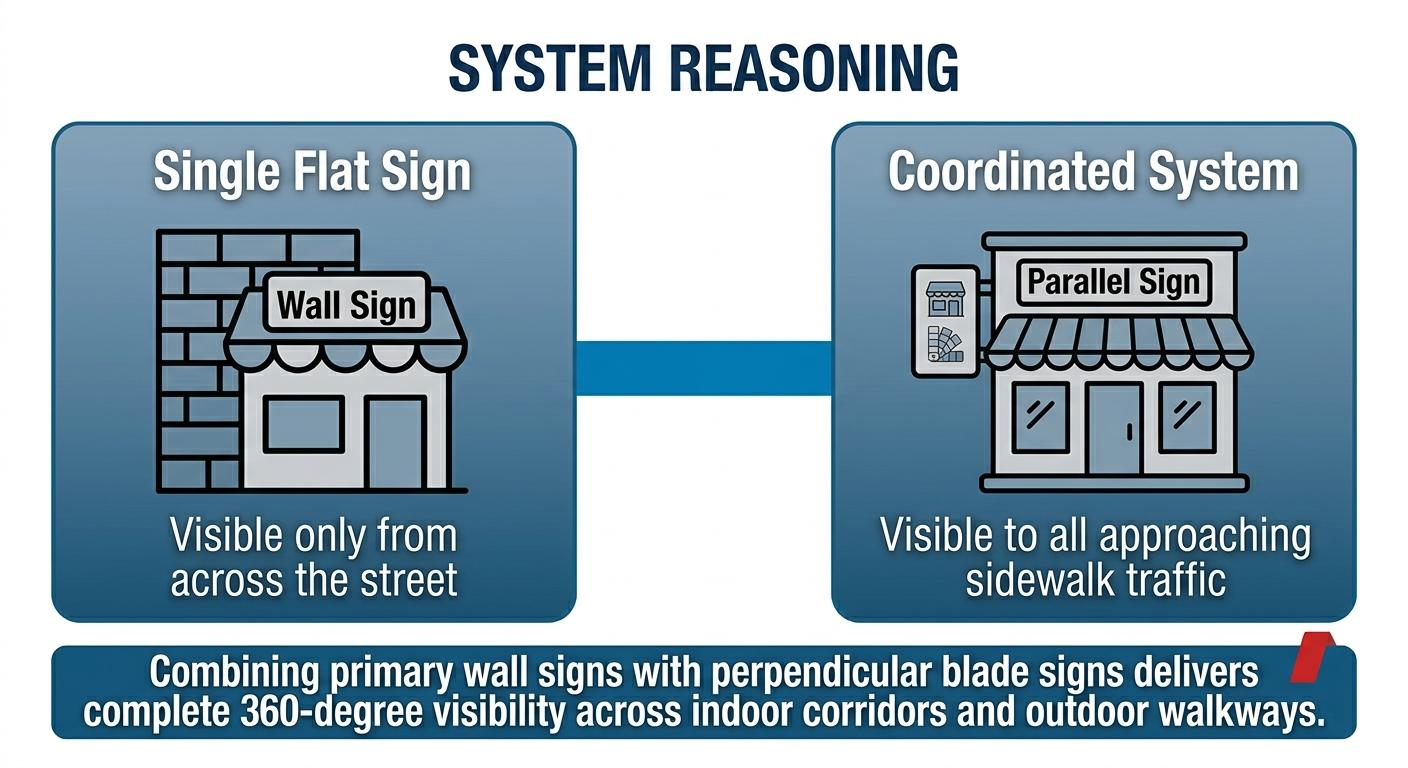
System Reasoning: Combining primary wall signs with perpendicular blade signs delivers complete 360-degree visibility across indoor corridors and outdoor walkways.
What Do Blade Signs Cost
Understanding commercial pricing requires evaluating total installed value rather than simple material sizes. While basic off-the-shelf plaques exist, commercial-grade architectural blade signs represent a complete design, fabrication, and mounting process.
Investment ranges depend on whether the display is interior or exterior, non-illuminated or LED-lit, and single-unit or part of a campus-wide wayfinding system.
| Sign Category | Estimated Installed Starting Range | Primary Feature Drivers |
|---|---|---|
| Small Interior Identification Sign | $1,000 to $2,500+ | Acrylic or Aluminum, Custom Bracket, Tactile/Braille |
| Custom Non-Illuminated Exterior Sign | $2,500 to $5,000+ | Heavy-Gauge Aluminum, HDU Core, Weatherproof Finish |
| Internally Illuminated Exterior Sign | $6,000 to $10,000+ | Low-Voltage LEDs, UL Listing, Internal Power Supply |
| Custom Architectural Sign | $8,000 to $15,000+ | Stainless Steel Chassis, Halo Lighting, Steel Stiffeners |
| Multi-Sign Wayfinding Program | Priced by Scope | Volume Discounts, Standardized Substrates, Campus Scale |
Factors That Affect the Final Cost
When budgeting for a projecting sign program, several operational and site variables shape the final investment:
- Dimensions and Material Selection: Premium marine-grade aluminum, stainless steel, and carved high-density urethane (HDU) cost more upfront than basic plastics but provide greater durability and weather resistance.
- Illumination Requirements: Adding internal low-voltage LED modules, power transformers, and UL safety listings increases fabrication complexity and long-term night visibility.
- Wall Construction and Mounting Hardware: Mounting through a stucco wall assembly may require locating structural framing or adding appropriate backing, while concrete and steel require different mechanical anchors.
- Installation Access and Height: Exterior installations requiring boom lifts, bucket trucks, or specialized scaffolding affect field labor requirements.
- Engineering and Permitting Needs: Depending on sign dimensions, weight, mounting surface, and local city jurisdiction, specific exterior projects require stamped structural calculations or municipal plan checks.
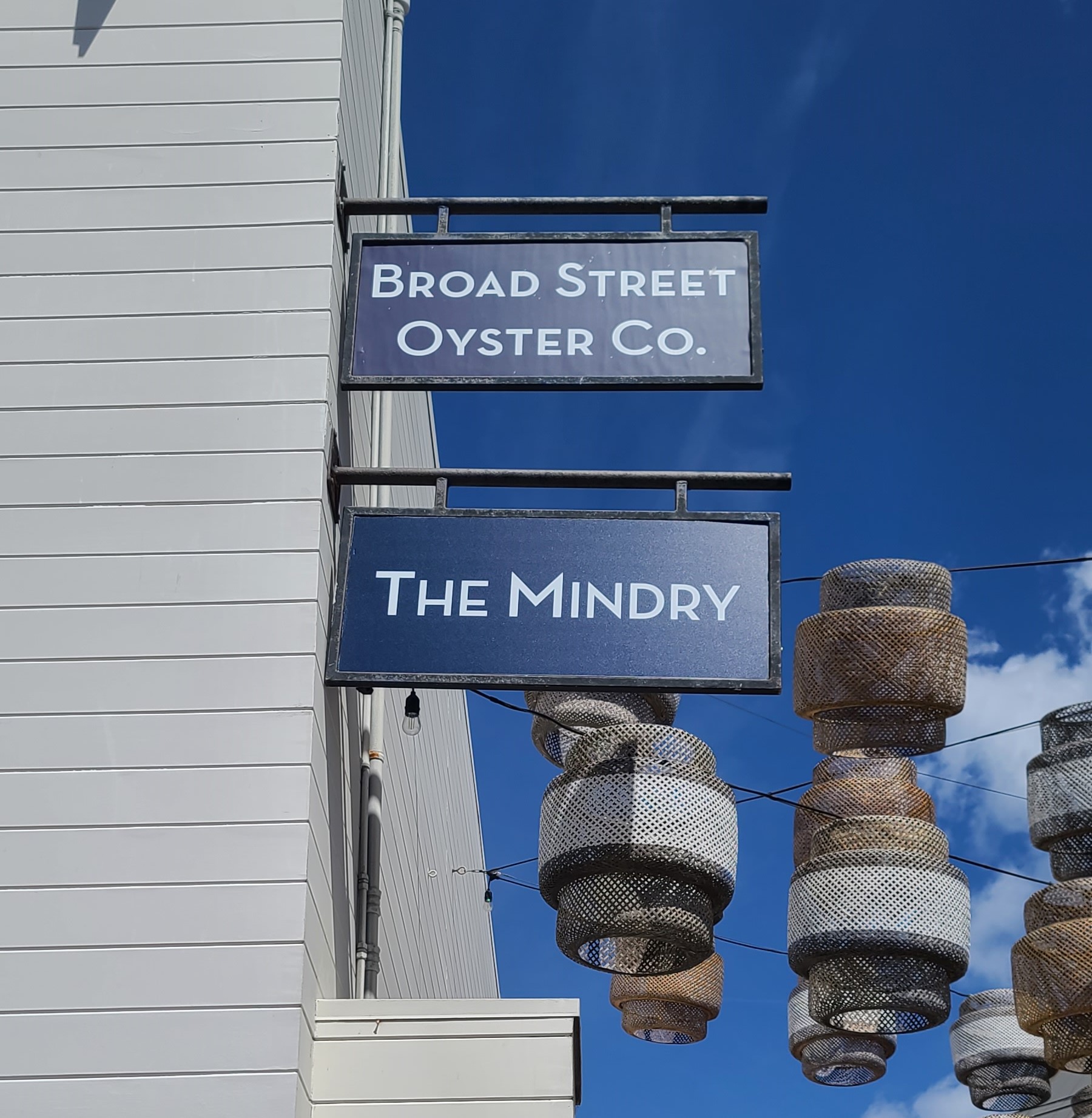
Uniform retail blade signs for Jamestown's Malibu Village, aligned along an open-air shopping plaza walkway, delivering clear pedestrian wayfinding for surrounding storefronts.
Blade Signs in Practice Interior and Exterior Examples
Real-world commercial projects demonstrate how projecting signs solve unique visual challenges while enhancing property aesthetics across Southern California.
Retail Sidewalk Impact in Pacific Palisades
When engineering custom retail blade signs for Veronica Beard in Pacific Palisades, the goal was capturing high-density sidewalk foot traffic along an upscale retail row. We fabricated a double-sided architectural panel that extends perpendicularly from the storefront, instantly drawing eyes down the walkway. For nearby evening dining venues, installing a neon blade sign in Pacific Palisades provides glowing 24-hour visibility that draws visitors from blocks away.
Healthcare Wayfinding in Encino
Managing complex navigation across medical facilities requires a clear, professional visual hierarchy. Our project engineering a directional blade sign in Encino shows how interior projecting displays guide patients through shared clinical corridors calmly and efficiently, reducing missed appointments and hallway congestion.
Multi-Angle Visibility in High-Density Centers
In major commercial developments like Century City, combining projecting hardware with storefront window displays creates a complete visibility network. Pairing double-sided projecting signs alongside primary building letters ensures your business captures both long-distance driveway views and immediate sidewalk foot traffic.
How to Plan a Blade Sign Package
Deploying a successful projecting sign program requires aligning user movement, architectural context, and local guidelines before cutting any physical metal.
-
1
Understand how people move through the space. Walk the physical path your visitors take. Identify key decision points in hallways, parking structures, and outdoor walkways where directional cues add the most value.
-
2
Determine what each sign needs to communicate. Keep message text concise. Use clear room numbers, business names, or universal pictograms to ensure instant legibility for passing pedestrians.
-
3
Select the best location and viewing height. Position displays at uniform heights that clear pedestrian pathways comfortably while avoiding visual clutter from light fixtures, tree branches, or architectural overhangs.
-
4
Coordinate the design with the property. Match frame finishes, background colors, and typographic fonts with your building's master architectural palette to ensure the signs look intentional and native.
-
5
Identify the wall or mounting surface. Inspect whether mounting surfaces consist of brick, poured concrete, drywall over steel studs, or glass curtain wall to determine proper mechanical fasteners.
-
6
Review landlord and municipal requirements. Verify property leasing guidelines and local city zoning codes regarding projection limits and public right-of-way clearances.
-
7
Coordinate blade signs with your broader wayfinding system. Align your projecting plaques with central lobby directories, wall-mounted room signs, and entrance door markers to create a seamless, end-to-end user journey.
Could Blade Signs Improve Your Property?
Projecting signs are often an overlooked tool in commercial design, yet they deliver incredible value for visibility, wayfinding, and overall property appeal. By placing vital directional information directly in the natural line of sight, a well-planned sign network transforms a confusing layout into an inviting, user-friendly environment.
Whether you are updating a multi-tenant office building, managing a medical campus, or refining a retail shopping plaza, Premium Sign Solutions is ready to help. We guide you through site surveys, design coordination, custom fabrication, and professional field installation.
Schedule a Video Consultation